How I Cut the Entrance Hole Without Splintering the Face
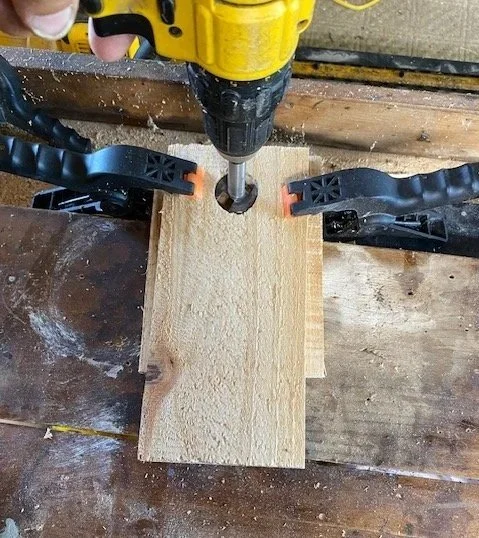
It only takes about a minute to drill an entrance hole. Funny thing is, I can still mess one up if I get in too much of a hurry.
I've ruined a few birdhouse fronts trying to get a good hole cut. Cedar is forgiving in a lot of ways, but it'll remind you pretty quickly if you rush it.
Things got a lot cleaner once I switched to a Forstner bit.
I use a one and one-quarter inch bit for chickadees, wrens, and titmice, and a one and one-half inch bit for bluebird houses. The size depends on the bird, but I've found the way you drill it matters just as much as the size of the hole.
One mistake I made early on was drilling without a scrap board behind the front. Everything looked fine until the bit broke through the back. That's when the cedar liked to splinter. It didn't happen every time, but it happened often enough that I stopped taking the chance.
Now I clamp a scrap board behind every front before I drill. It only takes a few seconds, but it supports the wood fibers and leaves a much cleaner edge.
The other lesson was patience.
The last little bit of the cut is where I used to get into trouble. If I hurried the drill through, the edge almost always ended up rougher than I wanted. Slowing down made a bigger difference than anything else I changed.
Every now and then the wood still surprises me. A knot or a change in the grain has a way of saying who's really in charge. Usually a little sanding is all it takes to clean things up, but I'd rather not have to do that.
After drilling several entrance holes, I've learned that the hole itself only takes a minute to make.
Getting it right takes a little longer.