Brushes — So Many Choices
Ok, I know I can’t be the only one. I once spent more time fixing a paint job than it took to build the birdhouse in the first place.
It wasn’t the wood. It wasn’t the color.
It was the brush.
I had just finished painting the last piece when I saw it. A single bristle sitting in the wet paint like it had signed its name there. I tried to pull it out carefully. That smeared the paint and left a dull spot. I tried to smooth it over. That left a streak. By the time I stepped back, what should have been a clean finish looked like I had picked a fight with it and lost.
That was the day I stopped pretending all brushes are the same.
Every time I walk down the paint aisle now, I’m reminded there are way too many choices. Big ones, tiny ones, angled, stiff, soft. Some cost a dollar and some cost more than dinner. They hang there like I’m supposed to understand something about them.
What I do know is what I don’t want. I don’t want to chase bristles through wet paint. I don’t want lines where there shouldn’t be lines. And I don’t want a brush that feels like dragging a broom across a cedar board.
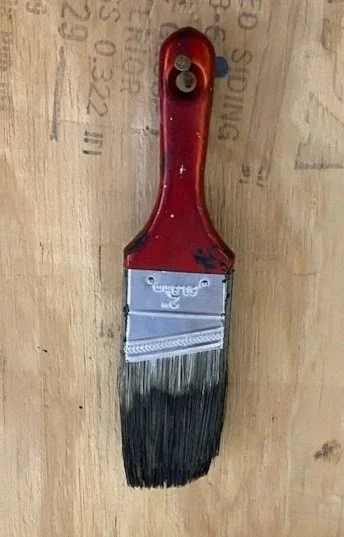
I guess after a while you learn what works for you and what doesn’t. A brush that’s too stiff leaves marks you can’t ignore. One that’s too soft bends and pushes paint around without ever really laying it down. Cheap brushes work fine for sealer until halfway through when they start coming apart. You only need that to happen once to say, I should’ve bought a better brush.
I’m not trying to build fine furniture. I’m building birdhouses, feeders, signs, simple things that sit outside in the weather and belong in a yard.
So when I find a brush that doesn’t shed, doesn’t streak, and doesn’t fight me, I keep it. I hang it back on the same nail in the shop and use it again next time.
Because sometimes the difference between a smooth finish and starting over is one loose bristle.