Why I Don’t Fix Everything
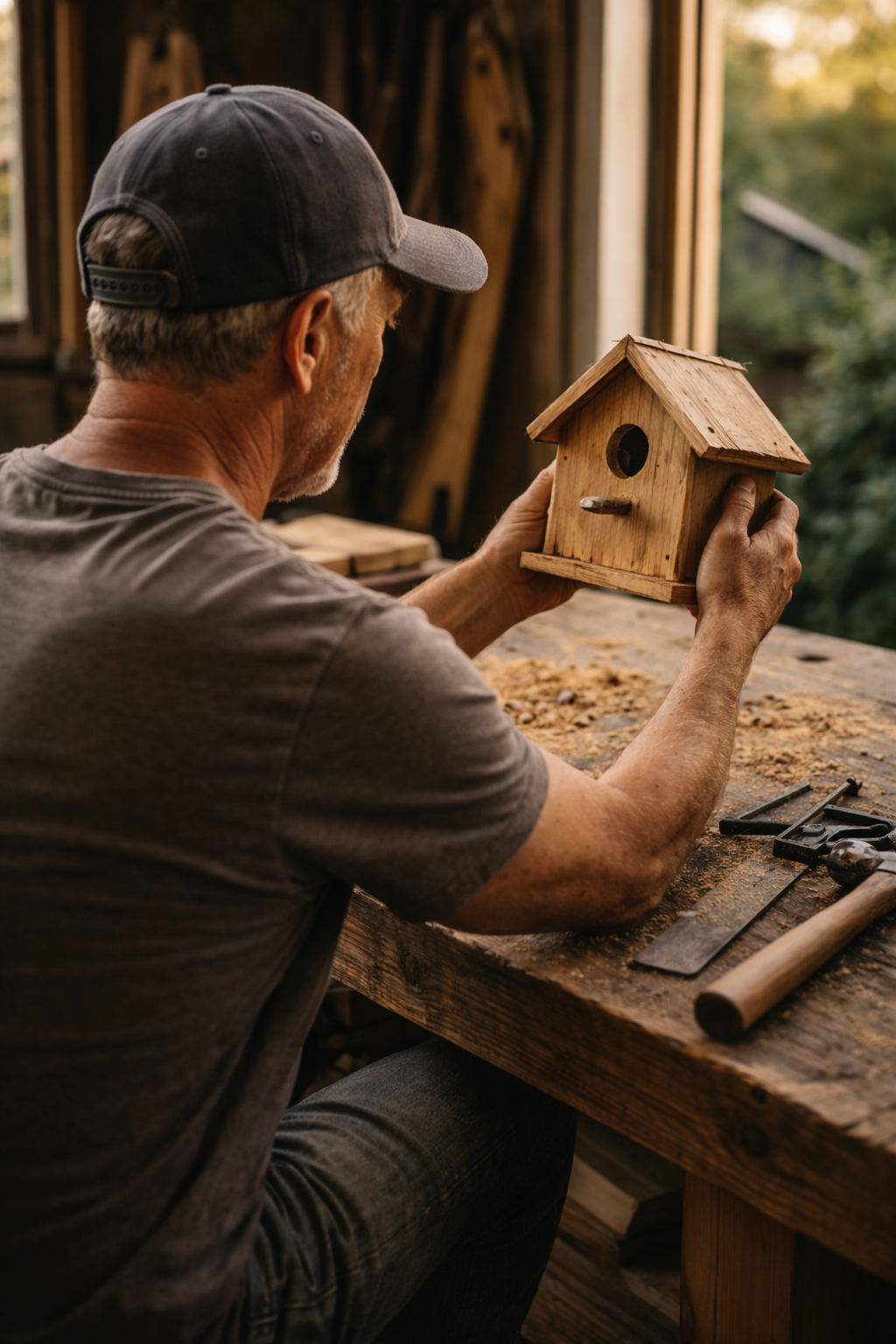
There's a point in almost every build where I notice something that isn't quite right. A line slightly off. An edge that could be cleaner. A faint mark that would disappear if I spent another few minutes sanding it.
When I first started building birdhouses, I tried fixing all of it. I thought that was part of doing things properly. But most of the time, fixing one small thing just led to chasing another. Before long I'd be standing there trying to make the house match some perfect version I had in my head instead of the one actually sitting on the bench.
Somewhere along the way, I started stopping sooner.
Now it usually happens near the end of a build. The roof is attached. Everything is solid. I'll pick the house up, turn it over in my hands, and spot something I could probably improve if I wanted to. Not because I don't see it—I do. I just don't always feel the need to mess with it anymore.
Most people would never notice half the things I catch myself looking at anyway. A slightly uneven edge. A knot that pushed something a little off-center. A faint saw mark that reminds me the wood was once part of a fence. The longer I work with cedar, the more I've come to appreciate those little things. The wood still looks like wood, and the birdhouse still looks like something made by a person instead of a machine.
After a certain point, there isn't much left to improve. There's only more time to spend trying. Sometimes the better choice is setting the house back on the bench and calling it finished.
That's usually when I know it's done.